
The marriage green card interview: what to expect
Nearly every marriage green card case in 2026 ends with an in-person interview — at a USCIS field office for adjustment cases, or a U.S. consulate abroad. Officers verify identity, review your documents, and test whether the marriage is real. With honest answers and organized evidence, it is a manageable, even routine, appointment. At USCIS interviews, your attorney attends with you — and Stokes interviews, New York's specialty, are ours too.
Why almost everyone gets interviewed now
A few years ago, many clean marriage cases were approved on paper. That era is over. The Department of State rolled back most consular interview waivers effective September 2, 2025, and USCIS now interviews marriage-based adjustment applicants nearly across the board. On top of that, USCIS policy memo PM-602-0199 (May 21, 2026) makes adjustment expressly discretionary — the interview is where an officer forms a view of your credibility and your positive equities. Treat it as the centerpiece of the case, not a formality.
What officers actually ask
Questions cluster around a few themes, and none of them are trick questions if the marriage is real:
Your story. How you met, first dates, the proposal, the wedding, who attended. Officers listen for texture — real couples remember odd details and occasionally disagree on small ones.
Daily life. Who wakes up first, who cooks, what side of the bed each of you sleeps on, what you did last weekend, names of in-laws and close friends, pets, commutes.
Money and home. Rent or mortgage, whose name is on the lease, how bills get paid, bank accounts, insurance, taxes — the paper trail of a shared life. This is where your bona fide marriage evidence and the answers need to match.
Your applications. Anything on the I-485, I-130, or DS-260 is fair game: addresses, jobs, prior marriages, arrests, immigration history. Inconsistency between forms and testimony causes more trouble than any single hard fact. Answer honestly — always — and if you don't know or don't remember, say so rather than guessing.
Documents to bring
Bring originals of what you filed as copies, plus everything new since filing:
Passports and government IDs for both spouses · the interview notice · marriage certificate and any divorce decrees · birth certificates · updated joint documents (recent bank statements, current lease or deed, latest tax return filed jointly, insurance cards, utility bills) · recent photos together with family and friends · children's birth certificates if any · updated affidavit of support financials if the sponsor's job changed. Organize it in a labeled folder — an officer who can find things quickly starts the interview on your side.
One document deserves special timing care: the medical exam. A Form I-693 signed on or after November 1, 2023 is valid only while the application it supports is pending, so coordinate the medical exam with your case rather than completing it too early or letting a refiled case orphan it.
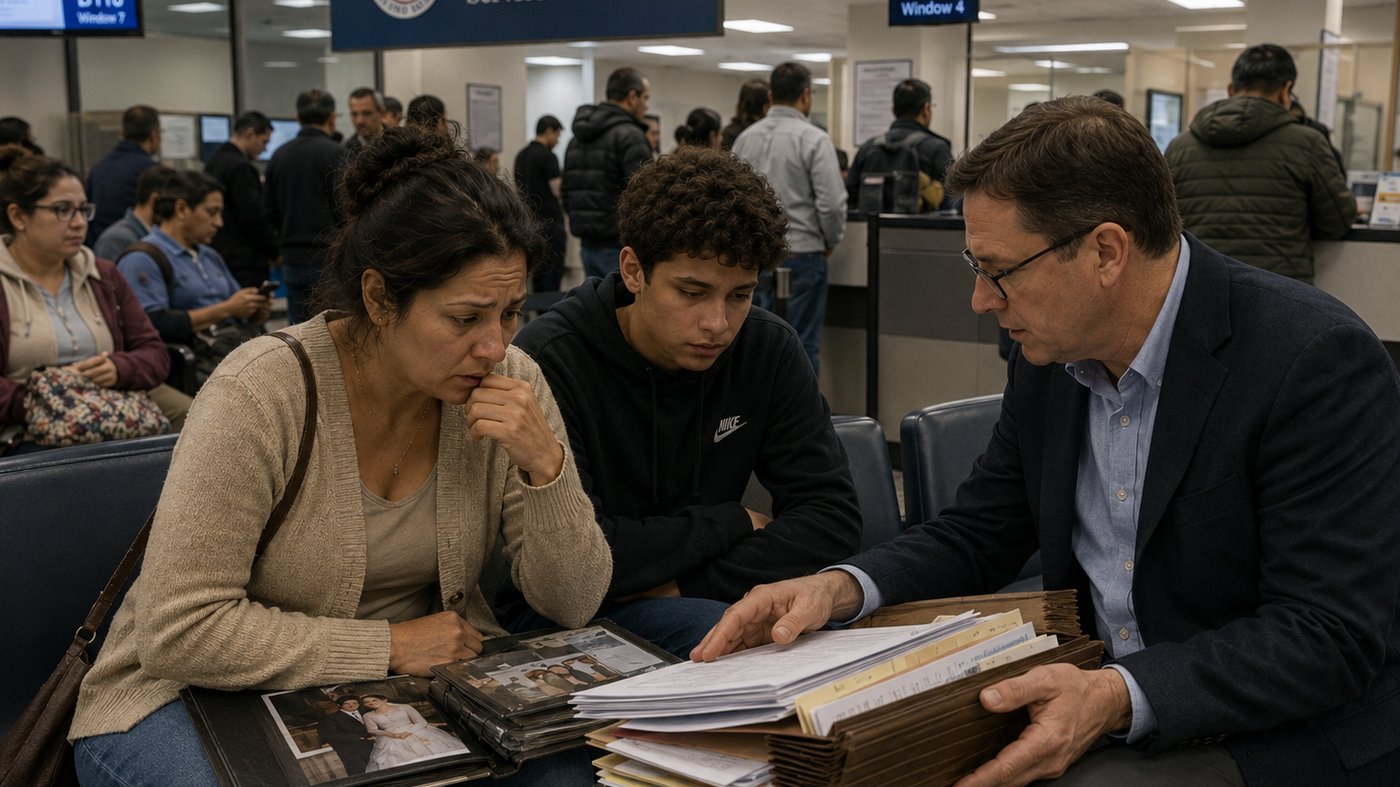
The Stokes interview: separated questioning
If the first interview leaves an officer unconvinced — thin evidence, inconsistent answers, red flags in the file — the couple can be scheduled for a Stokes interview, named after a New York case and used heavily in New York City. Spouses are questioned separately, often for hours, on detailed questions about the home and relationship; the answers are then compared, and discrepancies are put to you to explain.
A Stokes notice is serious but survivable. Real couples get Stokes interviews and pass them regularly. What matters is preparation with counsel, truthful answers (memorized scripts collapse under separated questioning), and understanding that small honest discrepancies are normal — it's patterns of contradiction that sink cases. If fraud is being alleged outright, read our page on marriage fraud allegations and get an attorney involved before the interview, not after.
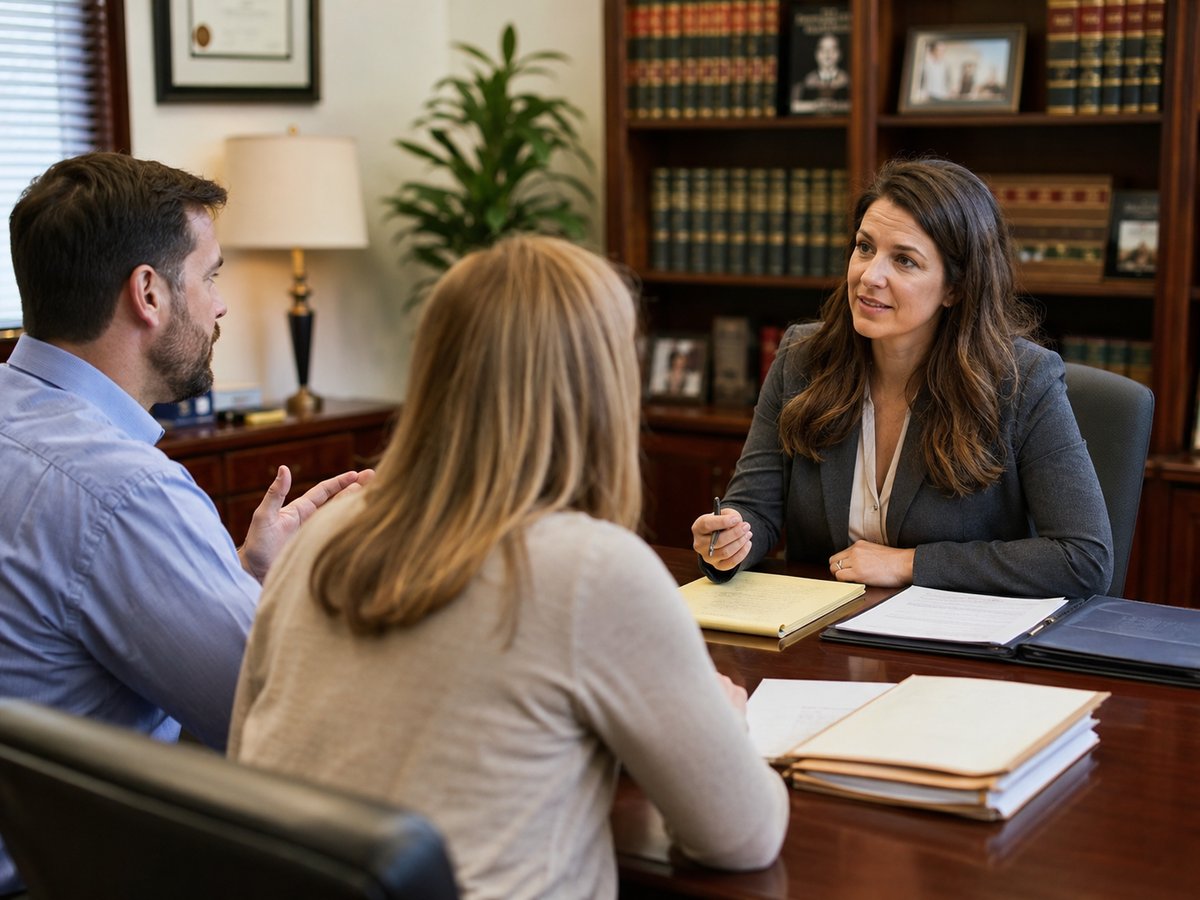
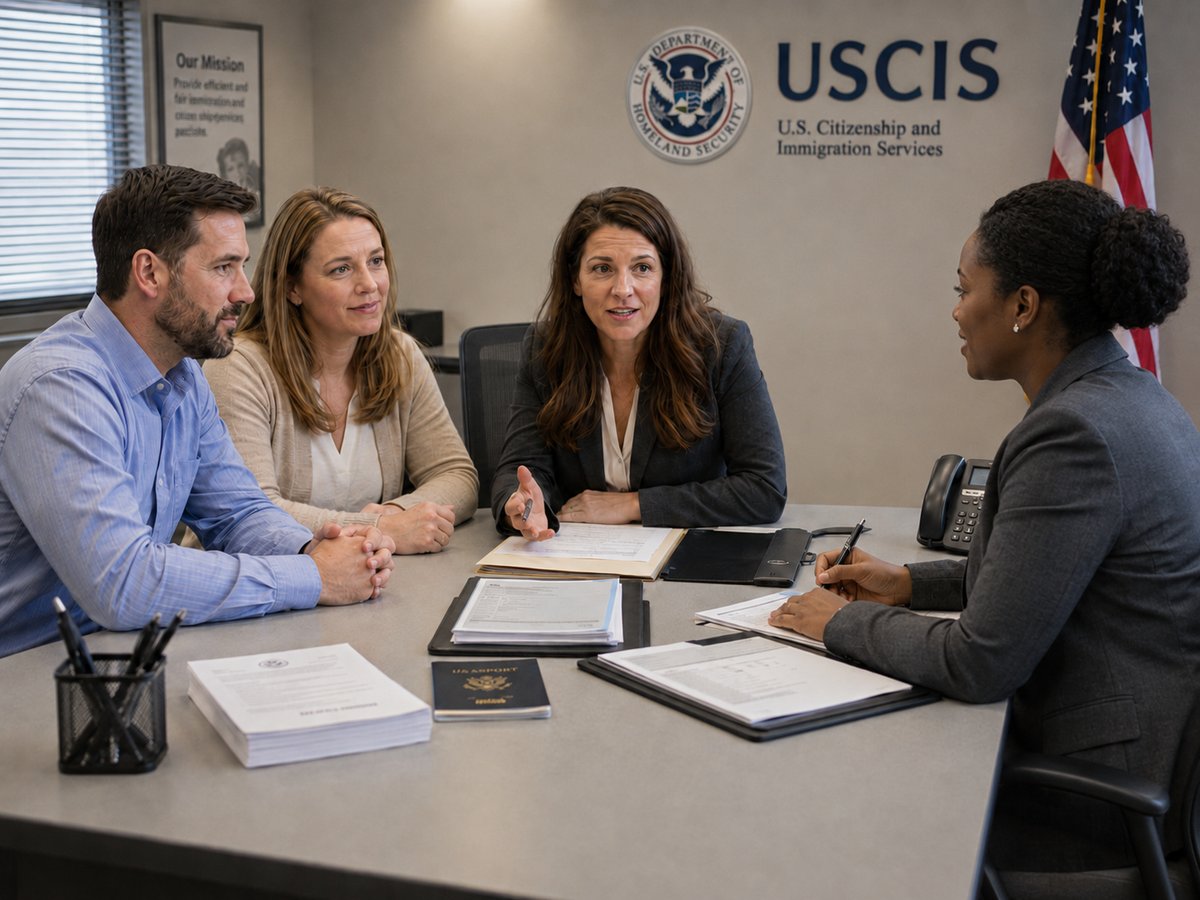
We prepare you before the appointment — and at a USCIS interview, an attorney sits beside you in the room.
Can your attorney attend?
At USCIS interviews — yes. You have the right to have your attorney present at an adjustment interview, and it changes the dynamic: counsel can clarify questions, object to improper lines of inquiry, take a record of what was asked, and make sure evidence actually gets into the file. At Stokes interviews in particular, having an attorney in the room matters. We attend interviews with our clients as part of our flat-fee representation — see pricing.
Consular interviews are different: attorneys generally cannot attend the visa window interview abroad. That makes pre-interview preparation the whole game in consular cases.
How consular interviews differ
In a CR-1/IR-1 case, the immigrant spouse interviews alone at a U.S. consulate after the National Visa Center stage. Expect the same bona fide marriage themes, plus close attention to the DS-260 — which now requires five years of social media handles — and to the petitioner's finances. The petitioner usually isn't present, so the applicant must know the couple's documents and story cold. Decisions come as approval, a request for more documents, or administrative processing; a well-prepared applicant with organized originals resolves most issues at the window.
How we prepare clients
Our method is simple and it works: we review your entire file for inconsistencies before the interview does; we run a realistic mock interview — including separated Stokes-style questioning when the case warrants it; we rebuild the evidence folder so updated joint documents lead; and we brief you on logistics, your rights, and what happens after. Preparation is not coaching you to perform — it is making sure the truth of your marriage comes through clearly under pressure.
What to do next
If your interview notice has arrived, start gathering updated joint documents today and read our evidence guide. If anything in your file worries you — a prior denial, inconsistent forms, a thin evidence record — talk to us before the interview date. We prepare and attend interviews for couples across New York, in English, Russian, Spanish, and Uzbek — and in any other language through our live translation services.
Common questions
Do both spouses attend the interview?
For adjustment of status, yes — USCIS expects both spouses at a marriage-based interview. For consular processing, the immigrant spouse attends alone at the consulate, which is why the applicant needs to know the couple's documents and history thoroughly.
What happens if we give different answers to a question?
Small honest discrepancies are normal and officers know it — real couples misremember dates and disagree about who said what. Problems arise from patterns of contradiction on things a genuine couple would know, or from answers that conflict with your own forms. Never guess to fill a gap; "I don't remember" is a legitimate answer.
What is a Stokes interview and will we get one?
A Stokes interview is a second, separated interview — each spouse questioned alone, answers compared. It is used when the first interview or the file raises doubts, and New York City offices use it more than most. Most couples never get one; couples who do can pass with truthful answers and serious preparation with counsel.
Can our lawyer come to the interview?
At USCIS field office interviews, yes — you are entitled to have counsel present, and we routinely attend with clients. At consular interviews abroad, attorneys generally cannot be at the window, so preparation beforehand carries the weight.
What should we absolutely not do?
Don't memorize a script, don't guess at answers, don't exaggerate, and never lie — a misrepresentation can create a permanent inadmissibility problem far worse than whatever it was covering. And don't arrive with a shoebox of loose papers; disorganized evidence reads as unserious.
What happens after the interview?
Some cases are approved on the spot or shortly after; others receive a request for evidence, a second interview notice, or — rarely — a notice of intent to deny. If you receive an RFE or NOID, respond with counsel: see our RFE response and NOID response guides. Silence for months is also common; check case status before assuming a problem.
Walk into your interview prepared, not anxious
Mock interviews, file review, and an attorney at your side at USCIS — flat fee, in English, Russian, or Spanish.