
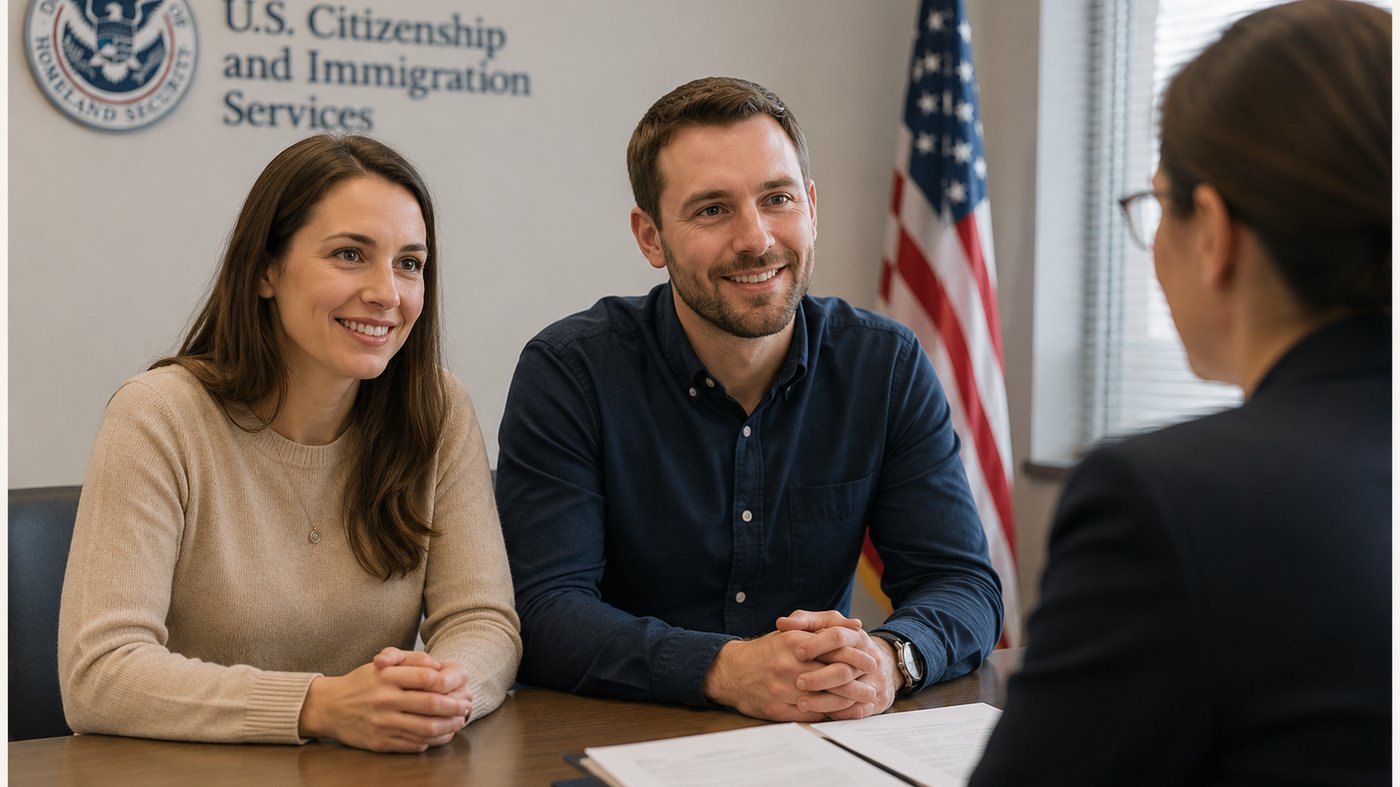
Why the interview matters again in 2026
For several years, a large share of marriage-based green card cases were waved through without an in-person interview at all. That has changed. USCIS has reinstated mandatory in-person interviews for marriage-based green cards, and interview waivers, once routine, are now rare — a small fraction of cases, down from years when the large majority of marriage cases were waived through. In practical terms, if you are filing a marriage case today, you should plan on attending an interview rather than hoping to skip it.
Both spouses should expect to attend. The officer wants to meet the couple, hear from each of you, and come away satisfied that the marriage is genuine and not entered into for immigration purposes. None of that should scare a couple in a real relationship. It simply means preparation matters more than it did a few years ago. (For the broader policy picture behind this shift, see our 2026 news roundup.)
Where the interview happens
Where you go depends on which path your case is following.
Adjustment of status (you are inside the U.S.)
If your spouse is adjusting status from within the United States, the interview takes place at a USCIS field office. You will receive a notice with the date, time, and address. The setting is an ordinary government office — you check in, wait to be called, and meet with an officer in a small room or at a desk.
Consular processing (your spouse is abroad)
If your spouse is applying from outside the U.S., the interview happens at a U.S. embassy or consulate in their home country, conducted by a consular officer. The documents and the spirit of the questions are similar, though the U.S.-citizen or resident spouse often is not required to attend the consular interview in person.
What to bring
Walking in organized makes a real difference, both for the officer's confidence and for your own nerves. Bring originals of your civil documents so the officer can compare them against the copies already in your file:
- Your marriage certificate, and the birth certificates of both spouses.
- Divorce decrees or death certificates for any prior marriages, showing each earlier marriage was legally ended.
- Government photo IDs and passports, plus any current work permit or travel document.
- The Affidavit of Support (Form I-864) and its financial proof — recent tax returns, W-2s or pay stubs, and an employment letter — so the sponsor's ability to support the household is clearly documented.
- Updated relationship evidence gathered since you filed, since the months between filing and interview usually add new joint records worth showing.
Packing tip
Put everything in one labeled folder, organized the way the topics will likely come up: identity documents first, then the marriage certificate, then financial papers, then relationship evidence. Bring a second copy of anything you want the officer to keep. Fumbling through a phone for documents in the room reads as disorganized — a tidy folder reads as a couple who has nothing to hide.
The kinds of questions officers ask
This is the part people dread most, and it is almost always less dramatic than imagined. The officer is trying to confirm that two people who share a life actually share that life. Expect questions about ordinary things:
- How and when you met, and how the relationship grew.
- Your daily routines — who wakes up first, who handles which chores, what a normal evening looks like.
- Details about your home and neighborhood.
- How you handle money, bills, and shared accounts.
- Each other's families, and how you spend holidays.
- Your plans together going forward.
The reassuring truth is that couples who genuinely live together answer these questions almost without thinking. You are not expected to recall every date with perfect precision. You are expected to sound like two people who know each other's lives, because you do.
Bona fide marriage evidence that helps
Documents speak before either of you does. The strongest cases pair credible testimony with a paper trail that shows two lives genuinely intertwined over time. Helpful evidence includes:
- A joint lease or mortgage, and utility bills in both names.
- Joint bank and credit accounts with real activity over months.
- Insurance policies — health, life, auto, renters — naming each other as spouse or beneficiary.
- Photos across time, ideally with family and friends, not just selfies, spanning the length of the relationship.
- Travel records and communication history showing the relationship was continuous, especially across any periods apart.
- Affidavits from people who know you both — friends, family, neighbors — describing the marriage as they have seen it.
You do not need every item on this list. You need a coherent, consistent picture. Quality and consistency matter more than sheer volume.
The officer is not looking for a perfect marriage. They are looking for a real one — and a real marriage leaves an honest trail.
The separate-interview, or "Stokes," possibility
Occasionally an officer has lingering concerns and decides to interview each spouse separately, comparing the two sets of answers. This is sometimes called a Stokes interview, and the name alone makes people anxious. It should not. It is simply a more careful version of the same conversation, and honest couples come through it because their answers naturally line up. The thing that protects you is not a rehearsed story — it is the truth, told the same way by two people who live it. If your case is referred to a second interview, that is a moment to involve counsel, not to panic.
Common mistakes to avoid
Most problems at the interview are self-inflicted and avoidable:
- Memorizing scripted answers. Officers are trained to notice rehearsed couples, and a script collapses the moment a question comes from an unexpected angle. Speak naturally about your actual life.
- Inconsistent dates and details. Take a quiet evening before the interview to refresh each other on key dates — when you met, when you married, where you have lived — so small honest gaps do not read as contradictions.
- Thin financial documentation. A weak Affidavit of Support or sparse joint finances draws questions and, sometimes, a Request for Evidence. Building the package right from the start is the surest way to avoid one — our guide on how to avoid an RFE walks through that.
How an attorney prepares you — and can attend
A good attorney does not coach you to perform. They help you understand what the officer is really asking, identify any soft spots in your evidence well before interview day, and assemble the documents into a clear, organized package. They also run through the likely questions with you so the room feels familiar rather than foreign. And yes — your attorney can attend the interview with you, sitting in to make sure the process is fair and to address any legal issue that comes up. For many couples, simply knowing someone in their corner is in the room turns a stressful morning into a manageable one.
Quick questions
Can my attorney come to the interview?
Yes. You have the right to be represented at a USCIS adjustment-of-status interview, and your attorney can sit with you, observe, and step in on legal matters. The officer still directs the questions to you and your spouse, but having counsel present is common and entirely appropriate.
What if we're nervous?
Nerves are expected and officers see them constantly — being anxious is not evidence of anything. Take a breath, listen to the full question, and answer honestly. If you don't know or don't remember something, it is far better to say so than to guess. You are not auditioning; you are confirming a life you already share.
If you have an interview coming up and want to walk in prepared, we can review your file, strengthen your evidence, and prepare you for the conversation. Request a free consultation and we'll talk it through.
This article is general information, current as of July 2026, and not legal advice.